
Best Practices for Maintaining Laminate Cutting Cylinders in Roofing Manufacturing

Maximizing Uptime: The Critical Role of Cutting System Maintenance in Roofing Manufacturing

In the high-demand world of laminate shingle production, the reliability of your cutting systems—specifically Pattern Cutters and Cut-To-Length (CTL) Cutters—can make or break operational efficiency. These systems are not just components; they are essential to maintaining consistent output and avoiding costly downtime. Implementing and adhering to rigorous maintenance protocols is key to ensuring peak performance, minimizing disruptions, and extending equipment lifespan.

Understanding Laminate Cutting Cylinder Basics

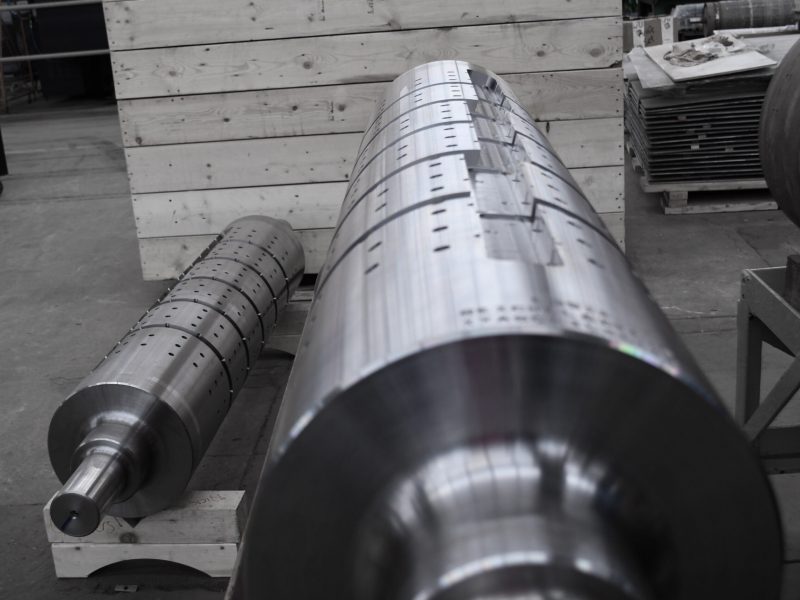
There are two primary types of cylinders used in Laminate shingles roofing manufacturing, Pattern Cutters and Cut-To-Length Cutters. 

Laminate Pattern Cutters precisely cut sheets into strips following specific patterns that are later laminated together to form Ribbons. The Cutter functions similarly to what machinists might call a Die Cutter. These systems consist of a rotating Anvil Roll working together with a rotating Cutting Cylinder (with replaceable Knives). Proper Pattern Cutter set-up is crucial for achieving the precise cuts needed for quality laminate shingle production. 

The Cut-To-Length (CTL) Cutter, as its name suggests, cuts the Ribbons to the appropriate length using a knife commonly with a single beveled side, to output Shingles. Cut-To-Length Cutter set-up requires careful attention to knife positioning and gap tolerances to ensure accurate shingle lengths. 

Cylinder 2 (2)

Maintaining Tight Tolerances

Precision Matters: Optimizing Cutting Cylinder Maintenance for Maximum Performance

In the world of Cutting Cylinder maintenance, precision isn’t just important—it’s critical. As the industry transitions from traditional steel knives to advanced carbide knives, maintaining exact tolerances has never been more essential.

Understanding Knife Longevity and Its Impact

Steel knives typically require replacement every 1 to 3 days due to rapid wear. In contrast, carbide knives—when properly set up and maintained—can last anywhere from 3 to 18 months. This remarkable difference in durability significantly reduces maintenance frequency and operational interruptions.

Why Tolerances Are Key

As steel knives wear, the gap between the knife edge and the Anvil Roll increases quickly—often by 0.0625 to 0.100 inches in just a few hours or days. This demands frequent adjustments to maintain cutting quality. Carbide knives, however, wear at a much slower rate—only about 0.0005 to 0.001 inches over their entire lifespan—minimizing the need for constant recalibration, especially when paired with an R&D Position Lock-up System.

Achieving a Clean Cut Every Time

To ensure complete and accurate cutting, the gap between the Anvil and the knives must be maintained within a tight tolerance of 0.003 to 0.008 inches, based on the system’s stack-up tolerances at setup. If this gap becomes too wide, the system may only partially cut the material—resulting in perforation cutting. This can lead to downstream issues such as incomplete separation or double shingles, depending on the cutter design.


Optimizing Cutting Cylinder Performance: Essential Maintenance Guidelines:

Regular Cleaning During Re-Knifing 

When re-knifing the Cylinder, thorough cleaning is essential. The knife beds (also called pockets) must be completely clean before installing new knives.  Even the smallest debris can affect performance–a single hair or small debris in the knife bed can shift the knife position by up to 0.001 to 0.003 inches, possibly creating perforated cutting, depending on other stacked-up tolerances. 

Proper Knife Installation Techniques 

Using the right tools is essential when installing knives. Proper carbide knife installation requires extra attention to detail due to the precision tolerances involved. The industry standard is to manually use an Allen key or ratchet wrenches and set wedge bolts to proper torque specifications rather than using power tools. While power tools might seem more efficient, there’s a risk of stretching and possibly stripping internal Cylinder threads, causing significant damage to the cylinder that may require refurbishment or replacement. 

Water Spray Management 

Water spray plays a critical role in cutting performance by serving as a natural lubricant.  Proper water flow keeps the knives cool and clean and helps minimize wear on both Steel and Carbide components. When cutting through granules and sand-coated Sheet (like cutting sandpaper that’s up to ten times thicker), the water lubrication becomes even more important. 

Proper Rubber Setup 

The rubber Strips and Bumpers on Cutting Cylinders serve important functions to both support Sheet or Ribbons and enable a nip point for pull force. At Cross Cut knives, rubber Strips need to be properly positioned against the knives, not pushing hard but “kissing” them to form a seal for Carbide knife Cutting. In addition, proper orientation of these rubber Strips is crucial–the angled side needs to touch the knife so that just the top forms a seal. Without this seal, abrasive materials may get between the knife and rubber Strip resulting in the Strips being torn off. This may lead also to Sheet and Strip breaks, or knife damage. 

Precise System Alignment 

Beyond just the cylinder itself, the proper alignment of the entire Cutting system is crucial. The entire Cutter assembly rolls are recommended to be aligned within 0.001-inch per foot square and level for best results (example, for a five-foot cylinder, this means staying within 0.005-inches total level and square to a center line).  

“If the cylinder and Cutting system is not aligned properly, the Sheet may walk or, if the Anvil and Cutter are not aligned, scissors cutting may occur.” 
“When it’s not aligned properly, it may accelerate the failure of the knife edges and cutting components.” 

How Often Do Cutting Cylinders Need Maintenance?

The frequency of maintenance depends largely on whether you’re using Steel or Carbide knives. 

  • Steel knife systems: Re-knifing every 1-3 days due to the rapid wear rate of steel against the abrasive granule and sand-coated Sheet material. This constant maintenance is particularly common on tab shingle production lines, where steel knives remain prevalent despite Carbide alternatives, and Steel knives are less commonly used on Laminate systems. 

  • Carbide knife systems: Re-knifing every 3-18 months, with the average being 9-12 months. This wide range of carbide knife use is the result of differences in setup quality, ongoing maintenance practices, line speed, and granule and sand-coated Sheet material. Roofing Manufacturers that understand and consistently apply proper bearing setups, tolerances, and perform regular checks, typically achieve longer lifespans.

Warning Signs That Maintenance Is Needed

While proactive maintenance is always ideal, there are several warning signs that your Cutting Cylinder needs immediate attention: 

  • Increased chipping or breaking of knives 
  • Sheet breaks or cutting quality issues 
  • Strip breaks 
  • Double cuts or missing cuts where it doesn’t cut the shingles to the proper length 
  • Perforation cutting  
  • Noise variation from the bearings 
  • Increased torque or load requirements 

Steel and Carbide knife systems show different warning patterns. Steel knife systems often show gradual degradation with increasing amperage draw, while Carbide knife systems tend to perform well until sudden failure occurs. 

The Keys to Optimal Long-Term Performance

How can you get your Cutting Cylinder to perform well for as long as possible? You can achieve optimal performance by: 

  1. Setting cylinders to ideal carbide specifications and OEM-recommended tolerances 
  2. Locking the cylinder in the correct gapped position with the anvil through a position lockup system 
  3. Setting bearings to the specified clearances 
  4. Contracting R&D for an on-site Cutter Training class to train your team on the above 
  5. Speed Matching and setting OEM-recommended ratios 
  6. Maintaining proper Anvil grinding to the recommended tolerances 
  7. Performing monthly or quarterly checks on all components


Reichel & Drews’ Cylinder Refurbishment Technology 

Reichel & Drews specializes in the expert refurbishment of steel knife cylinders, upgrading them to meet exacting carbide specifications. Through precision machining of the pockets and the installation of high-performance, replaceable inserts, we significantly enhance the durability and cutting efficiency of cylinders that once required frequent maintenance or struggled with performance. Our process extends the service life of your cutting equipment—delivering consistent, reliable results.

“Having Reichel & Drews refurbish your cylinders to the tolerances and having us put replaceable inserts in is what makes the difference.” This process allows manufacturers to gain the benefits of utilizing Carbide knives as they were intended with tight tolerances for improved cutting without investing in completely new Cylinder, reducing maintenance costs while improving cutting precision and consistency. 

Elevate Your Maintenance Skills with Our Expert Cutter Training Program

Ready to elevate your team’s cutting expertise?
At Reichel & Drews, our immersive two-day Cutter Training Program blends in-depth classroom instruction with practical, hands-on experience. Designed for maintenance professionals, this comprehensive course covers everything from Pattern Cutter and Cut-To-Length Cutter setup to precision alignment and maintenance techniques—all aimed at maximizing your Cutting Cylinder’s performance and longevity.

Contact Reichel & Drews today to schedule training for your team and transform your Cutting Cylinder maintenance practices from reactive to proactive.  With the right knowledge and techniques, you can significantly extend component life, reduce downtime, and improve cutting quality across your operation. 

RECENT BLOG POSTS

Minimizing Downtime With Fast Ship

Minimizing Downtime With Fast Ship Parts: ROOFING EQUIPMENT PRODUCTION PARTS Minimize Downtime. Maximize Productivity. When equipment fails unexpectedly, every minute counts–and so does every dollar that your plant spends when it is not running at full capacity. As such, it’s crucial for roofing manufacturers to minimize downtime, and Reichel &

Read More »