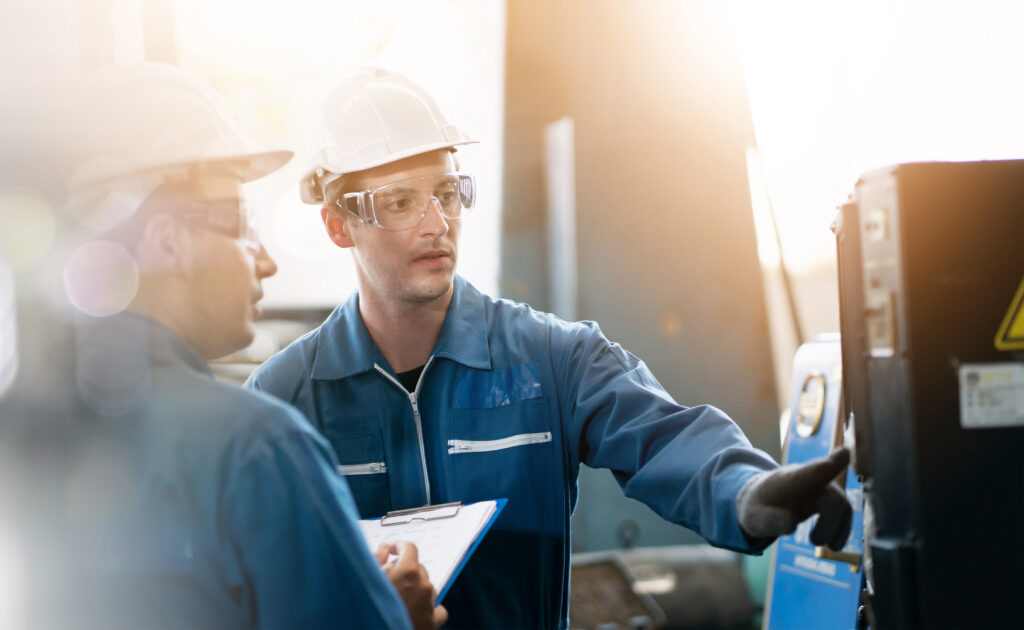
Safety on a roofing production line is not defined by a single guard, emergency stop, or procedure. Those elements are important, but they only work as intended when the entire operation supports them. Real safety comes from how the line runs, how people interact with it, and how consistently the process performs from shift to shift.
A safer line is built through four connected pieces: equipment, process stability, training and culture, When those align, operators are exposed to fewer hazards, issues are easier to spot, and the operation becomes safer.


A roofing line is a continuous process. Material moves through multiple stages, and each stage introduces different exposure to potential danger.
At the front end, operators may be working around large rolls, web handling, and splicing points. In coating and surfacing, higher temperatures and moving equipment add additional risk. Downstream, cutting, stacking, and palletizing involve faster mechanical motion and automated handling.
Instead of only asking where hazards exist, it is more useful to look at how often people need to be near them while the line is running.
Frequent interaction increases exposure. A safer line is one where those interactions are reduced as much as possible during normal operation, and where safety equipment and protocols are put into place when interactions can’t be avoided.
Physical safeguards such as guarding, interlocks, and emergency stops are essential. They help separate people from moving parts, pinch points, and hot surfaces. But equipment safety cannot stop at designing and installing these safeguards.
Good equipment design starts with risk assessment. This includes evaluating:
This approach ensures safeguards are applied where they are needed most, while still allowing the equipment to be operated and maintained effectively.
It is also important to recognize the difference between equipment design and plant responsibility. Machine builders provide safeguards as part of the equipment, but facilities are responsible for procedures such as lockout/tagout, training, PPE, and overall safety practices.
Both sides need to work together for a complete safety approach.
Lines that drift, stop frequently, or require constant correction create more risk.
When material does not track properly or buildup occurs, someone has to step in and fix it. A stable process reduces those situations. Consistent tension, controlled material flow, and coordinated line sections allow operators to stay focused on the process rather than constantly intervening
When a line runs smoothly, it requires fewer adjustments. Fewer adjustments mean fewer moments where someone must step in near moving equipment, troubleshoot material flow, or react under pressure. That is where safety and day-to-day operation begin to overlap.
In this way, uptime and safety are closely connected. A stable line is not just more efficient; it also reduces unnecessary exposure.
Safety improvements often come from small changes that reduce risk over time. If you’re evaluating your roofing line and looking for ways to improve safety, reliability, or operator interaction, our team can help identify opportunities and provide guidance based on your operation.
Sometimes it is impossible to avoid interacting with equipment in potentially dangerous conditions. Whether performing maintenance, clearing a jam, or troubleshooting an issue, there are situations where people need to be near areas of higher-risk equipment. In these cases, training on the safest way to do so is critical.
Training gives operators and maintenance personnel a better understanding of how the equipment works, what normal operation looks like, and how to recognize potential problems before they become larger issues. That knowledge helps people make informed decisions and respond appropriately when situations change.
It also helps create consistency across the operation. When teams understand the process, follow the same procedures, and know what to look for, there is less variation between shifts and fewer opportunities for mistakes.
Like equipment design and process stability, training serves as another layer of protection. It helps prepare people to work safely when interaction with the line cannot be avoided.

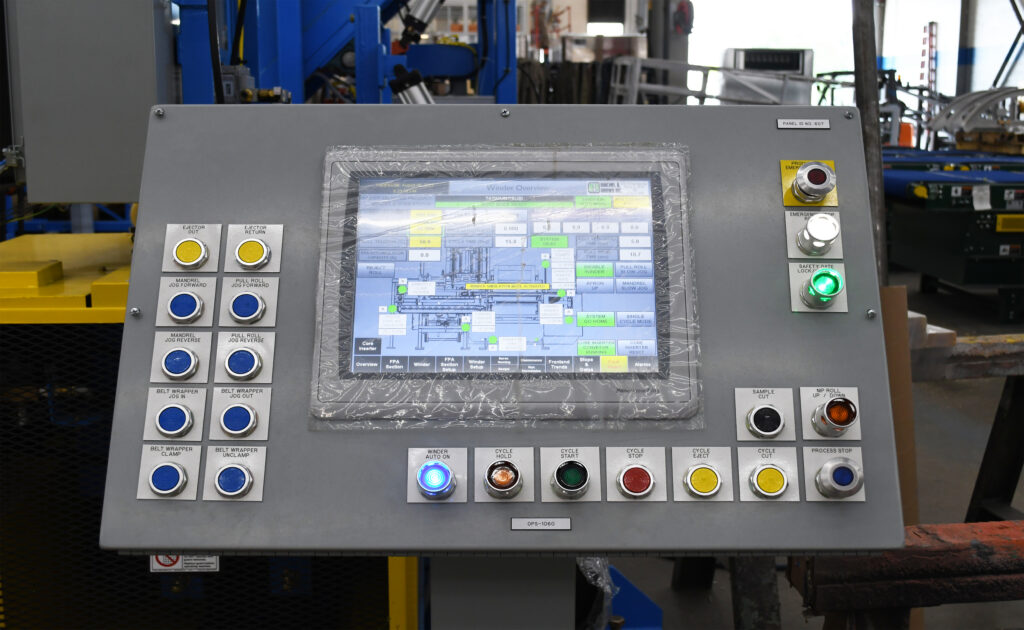
As roofing lines become more automated, modern control systems play a larger role in plant safety. Today’s systems provide operators with a real-time view of equipment status, process conditions, alarms, and production data from a centralized interface. Rather than relying on operators to spot issues in the field, modern controls help identify developing problems early and bring attention to conditions that may require action.
This becomes especially important when conditions begin to drift outside normal operating ranges. Modern controls can continuously monitor temperatures, speeds, pressures, motor loads, and other critical process variables. If an issue is detected, the system can generate alarms, guide operators to the source of the problem, and in some cases automatically respond before a situation escalates.
Many older control systems were designed primarily to keep the line running. Modern control platforms do much more. They can integrate safety devices, monitor critical equipment, track operating trends, and provide diagnostic information that helps operators make informed decisions.
Features such as safety-rated controls, interlocks, automated startup and shutdown sequences, and condition monitoring help reduce the chance of equipment operating under unsafe conditions. Historical data and event logging also make it easier to understand what occurred before an incident or process upset, helping plants identify recurring risks and make improvements over time.
As equipment ages, control systems can become a limiting factor in both safety and visibility. Updating controls is often about more than replacing obsolete hardware. It is an opportunity to give operators better information, improve response to abnormal conditions, and add safety capabilities that may not have been available when the line was originally installed.
Many safety risks come from routine tasks that happen during normal production, not just major failures.
These can include:
When these tasks require frequent manual involvement, operators spend more time near moving equipment.
Process improvements and automation can help reduce that exposure. Automated cleaning, improved material handling, and better controls all limit how often operators need to step in while the line is running.
The goal of this type of automation is not to remove people from the process. It is to reduce unnecessary interaction with higher-risk areas.

Automation advances like Reichel & Drews Taping Module make lines safer by eliminating the need for workers to perform repetitive high risk tasks.
For existing lines, safety should be revisited regularly. Over time, production demands change, speeds increase, and equipment is modified. What worked before may not fully support how the line runs today.
A few practical questions can help guide that review and shift the focus from compliance to day-to-day conditions:

Even with the most up-to-date safety equipment and protocols, it is plant culture that truly determines how safety is handled every day. Creating and maintaining a culture that focuses on and respects safety is key to keeping plant employees safe.
In a strong safety culture, people speak up when something does not look right. Near misses are treated as useful information, not inconveniences. Operators, maintenance teams, supervisors, and safety personnel all contribute to keeping the line safe.
One of the biggest risks is silence. When concerns are ignored or treated as a delay to production, people stop reporting them. The issue does not go away, it just becomes harder to see.
A healthy safety culture focuses on early communication:
When the team is encouraged to raise and address safety issues, they can be corrected before they affect both safety and performance.
Roofing line safety is not built from one feature or one decision. It comes from how the equipment is designed, how the process performs, and how people are supported.
A strong safety culture brings issues forward. Well-designed equipment helps reduce exposure. A strong training process keeps operators safe when they need to step in.
When those pieces work together, the result is a safer and more predictable operation.